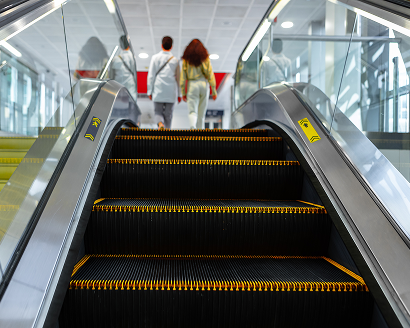

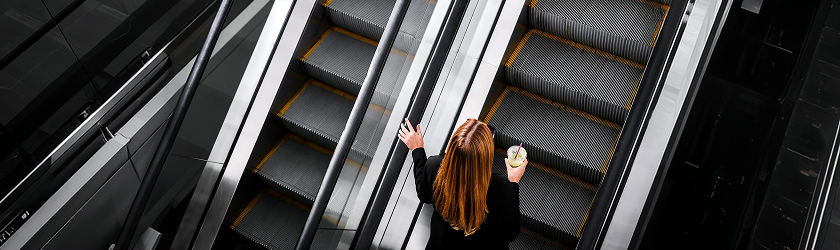
Commonly found in many busy places such as shopping malls, airports, hotels, arenas, stadiums, department stores and train stations, escalators are a part of many people’s daily routines. While they may seem like a safe way to go from one floor to the next, escalators can be very dangerous machines. Children and older adults are particularly vulnerable to escalator accidents, though anyone could suffer serious injuries from a dangerous escalator.
Escalator injuries are a deep concern for the attorneys at Davis, Saperstein & Salomon, P.C. We recently secured a $15 million settlement for the family of a 13-year-old girl who sustained traumatic injuries when her foot became stuck in an elevator that had been in use since 1958 at a department store in Garden State Plaza.
Our client was far from being the only person who has suffered an escalator accident. In fact, one day before her accident, another customer’s shoe was entrapped by the very same escalator. National statistics show that escalator accidents are tragically common. For example:
You are more than just a statistic if you have been seriously injured on an escalator. The attorneys at Davis, Saperstein & Salomon, P.C., are ready to listen to you describe what happened in detail during a free claim analysis. We will then give you advice about your legal options.
For more than three decades, we have used our legal experience and resources to help injured people. Contact us now to find out how we can help you.
 |
 |
 |
 |
 |
 |
How to Spot a Dangerous Escalator
Escalators are very dangerous pieces of equipment that should be treated with respect and caution.
There are several common types of escalators, including:
- Crisscross layout
- Multiple parallel layout
- Parallel layout
Regardless of the type of escalator you encounter, there are some warning signs of a dangerous escalator that you should be able to recognize. If you notice any of the following, do not ride the escalator:
Odd sounds.
It is important to listen to the escalator. If you hear any grinding, screeching, thumping, or any other unusual sounds, chances are there is a safety issue.
Gaps and spaces.
Do you see any wide spaces between the steps? If so, then anything can get caught in them – especially hands and feet.
Missing foot brush.
These brushes are installed to promote passenger safety by guiding passengers’ feet away from the skirt panels. When passengers stand too close to the skirt, they should feel the bristles and know to move away from the sides. If there is no foot brush, riders may not realize how close they are to the side, and there is a greater risk of injury. Smooth risers. All escalator steps should be smooth and contain no bumps. If there is any friction, there is a greater chance that soft rubber sneakers and shoes will become trapped.
Missing comb plates.
A comb plate is located on the bottom and top landings of the escalator. All of the teeth should be perfectly aligned. If any are missing, it greatly increases the chance of entrapment and injury.
Missing escalator steps.
There should never be any part of the escalator step missing. Each part of the step – the top and the sides – should be intact and sturdy, never loose or shaky.